In my previous post Unschooling and Natural Learning Activities I’m doing with My 8 Month Old, I wrote that we include our little one “minute everyday living activities” such as collecting mail from the post office and paying for our groceries at the store.
These minute activities can teach a lot of different things:
- Numeracy in the form of counting money to pay at the check out
- Literacy in the form of reading labels of food and letters
- Communication between mama and the check out person
Whether you’re a home schooling parent, unschooling mama or your kids go to public or private school, there are a few simple things you can implement at home to promote natural literacy for your children.
In this post I’ll share the things we do on a regular basis with our little one to promote natural literacy and some of the practical steps and strategies we have implemented to encourage natural literacy and create a thriving literary atmosphere.
“One of the greatest gifts adults can give—to their offspring and to their society—is to read to children.”
Carl Sagan (American astronomer, planetary scientist, cosmologist, astrophysicist, astrobiologist, science communicator, author, and professor)
What is Literacy and Why is it important?
Literacy refers to the foundational skills and knowledge related to reading, writing, and communication. It encompasses not only the ability to decode written words but also the comprehension, interpretation, and expression of meaning through language.
Literacy is crucial during early childhood as it lays the groundwork for future academic success and overall development.
Literacy is essential for young child development as it contributes to language development, cognitive skills, school readiness, imagination, emotional growth, social skills, parent-child bonding, and instills a lifelong love for learning.
Nurturing literacy in early childhood through for example nursery rhymes and creating a literary rich environment, creates a strong foundation for children’s academic, social, and personal growth, setting them on a path towards future success.
What is Natural Literacy?
In unschooling, you might hear the term “Natural Literacy” or “Natural Numeracy”. I wasn’t quite up to scratch with their definitions and hence I did some research and wrote this article.
Natural literacy refers to the way children naturally learn through being exposed to language/literacy components known as the ‘Big Six’:
- oral language,
- phonological awareness,
- phonics,
- vocabulary,
- fluency and
- comprehension
Creating a Literacy Rich Environment at Home + Benefits
A literacy-rich environment is an environment that fosters and promotes literacy development in young children. It is filled with books, reading materials, and opportunities for meaningful reading and writing experiences. Creating a literacy-rich environment at home or in educational settings is crucial as it offers numerous benefits to young children’s overall development.
First and foremost, a literacy-rich environment cultivates a love for reading in children. When they are surrounded by a wide variety of books and reading materials that cater to their interests and reading levels, they are more likely to engage with reading as a pleasurable activity. This love for reading sets the foundation for lifelong learning and a continuous quest for knowledge.
A literacy-rich environment also enhances language skills in young children. Exposure to books, stories, and written language expands their vocabulary and improves their comprehension abilities. Through reading and discussing stories, children develop a deeper understanding of language structures, storytelling patterns, and narrative elements. They become more adept at expressing themselves verbally and in writing.
Moreover, a literacy-rich environment stimulates cognitive development in young children. Reading promotes critical thinking, problem-solving, and imagination. It exposes children to different perspectives, cultures, and ideas, fostering their creativity and expanding their horizons. Engaging in writing activities, such as keeping journals or creating stories, enhances their cognitive abilities by encouraging reflection, planning, and organisation.
A literacy-rich environment also fosters positive social and emotional development. Reading and discussing books together provide opportunities for bonding, communication, and shared experiences between children and their caregivers. It creates a safe space for discussions about emotions, values, and empathy. Additionally, reading stories that depict diverse characters and situations helps children develop a sense of understanding, tolerance, and appreciation for others.
Creating a literacy-rich environment can be achieved through simple steps such as providing a variety of books, organising reading spaces, and incorporating reading and writing activities into daily routines. It is not only about the quantity of resources but also about the quality of interactions and experiences that promote a love for reading and language development.
7 Ways to Promote Natural Literacy In the Home
Setting the Example
I firmly believe that actions speak louder than words, and as a parent, it is crucial for me to lead by example. I aim to regularly engaging in reading myself, although due to my current time constraints, I prefer to LISTEN to books on Audible instead.
I have placed a book besides my bed to read before bed (when my little one decided to sleep on her own) and by reading a book instead of scrolling on my phone I hope to demonstrate the joy and importance of reading to my child. When my child sees me immersing myself in books, they are inspired to follow suit.
Through my example, I hope to not only instill a love for reading but also teach them the value of lifelong learning and personal growth (which is something I’m a HUGE FAN OF!).
I am grateful for the opportunity to show my child the wonders of the written word and the joy it brings to our lives.
Creating a Reading Haven
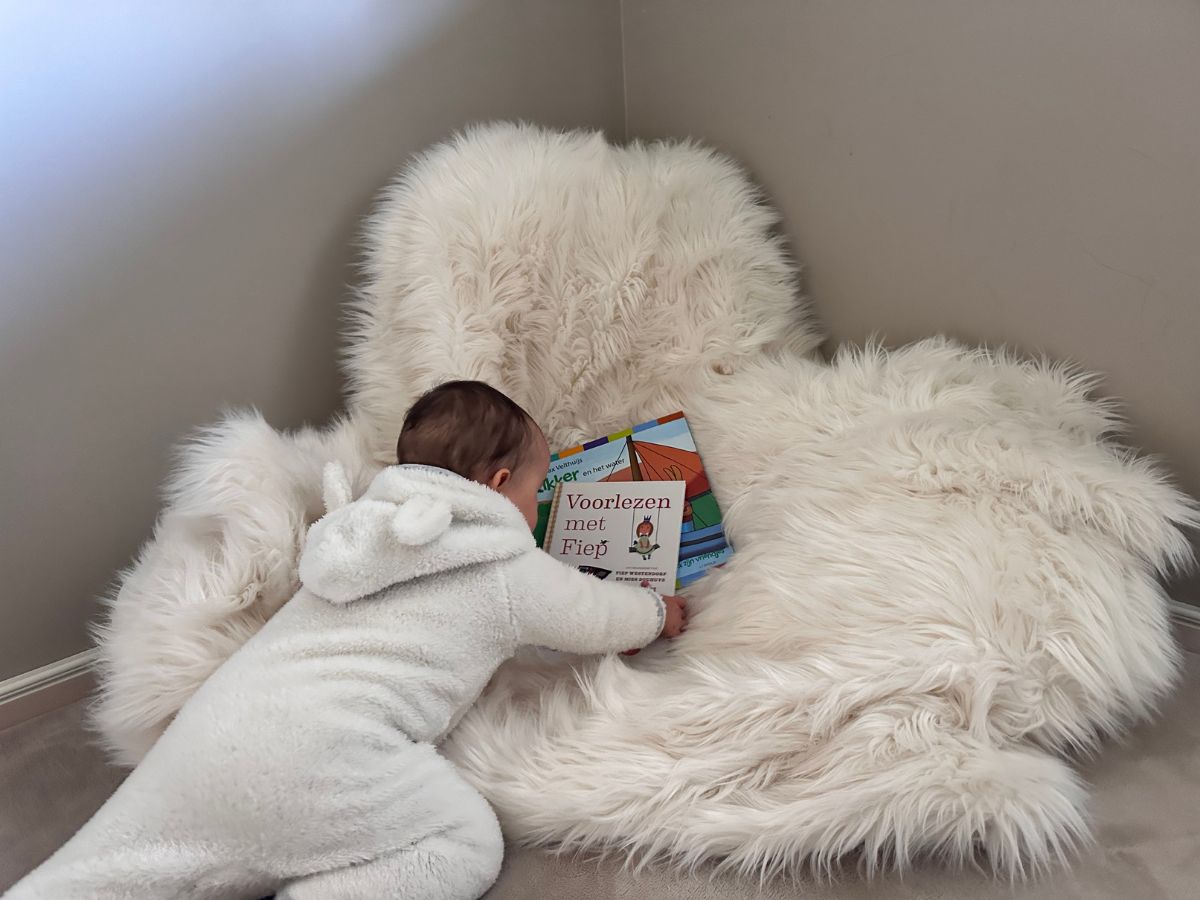
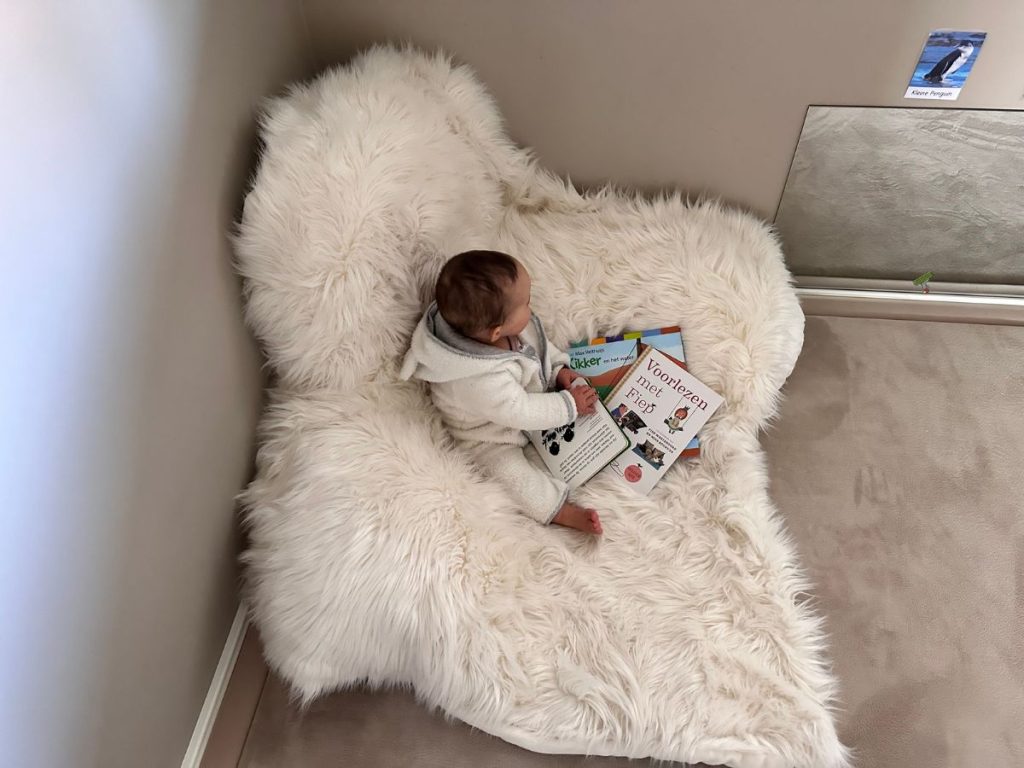
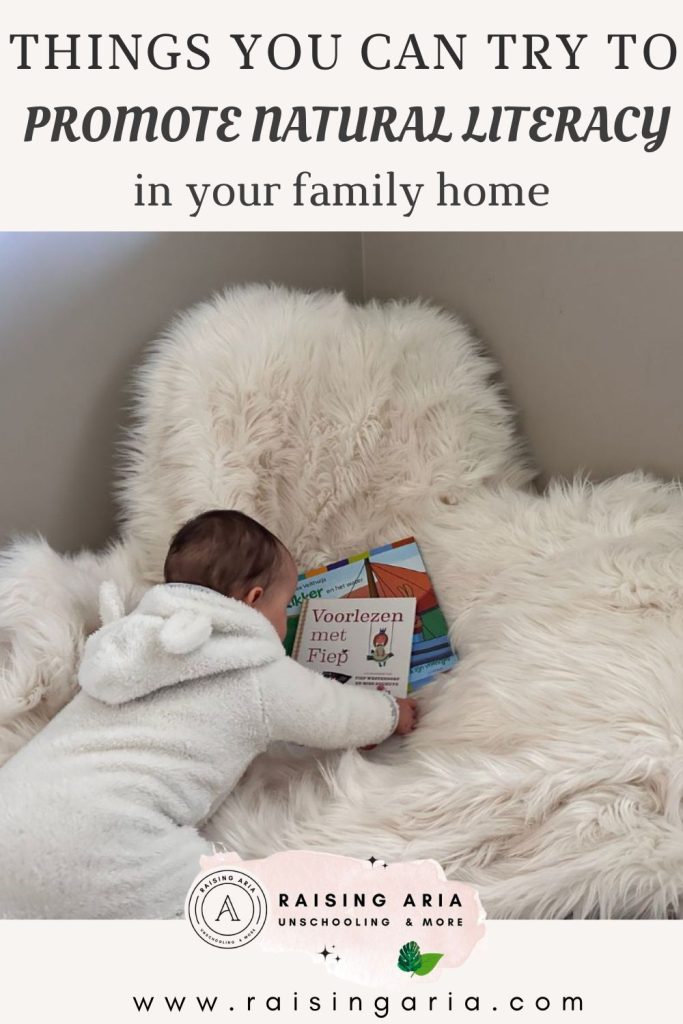
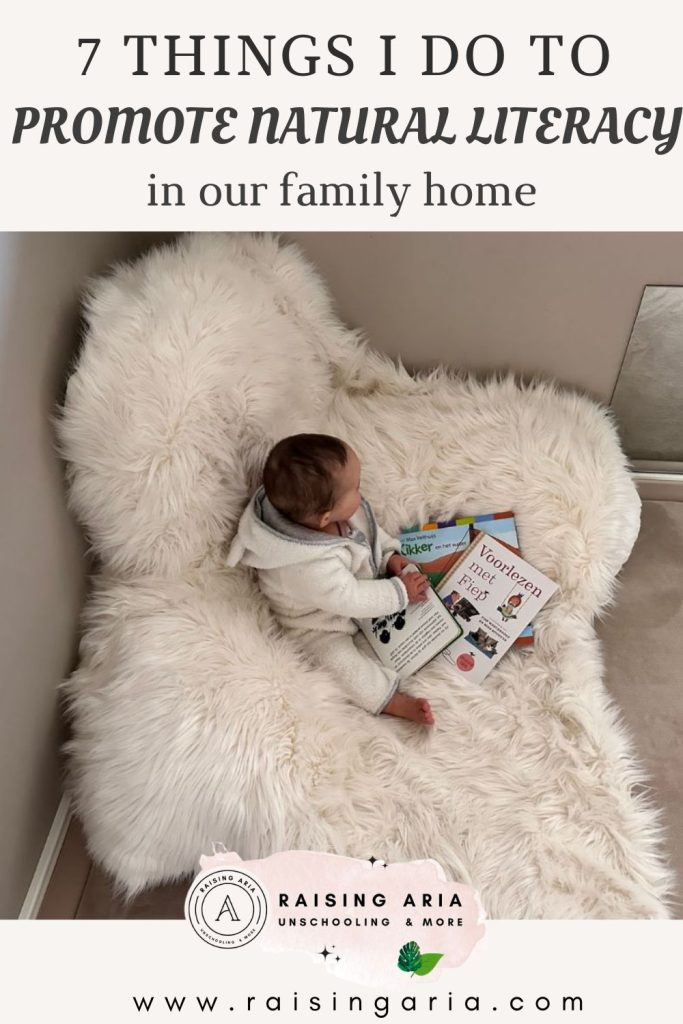
I have recently designated a cozy corner in our playroom as a dedicated reading nook.
Filled with comfortable cushions, soft lighting, and a few books, this space beckons to escape into new worlds!
By creating a warm and inviting atmosphere for reading, we have made it an appealing activity for the whole family.
Building a Diverse Home Library
This is something I am currently working on – A well-curated home library!! I feel this is a treasure trove that fuels a love for reading.
I currently have a collection of books covering various genres, catering to the different interests and age groups of our family members. I mostly have health and fitness books and personal development, finance and spirituality books, and I feel I should add a few extra contemporary works so that when our little one comes of age, there is truly PLENTY to choose from.
Tip: For little ones you can start as early as possible and introduce cloth books and hardcover books of which they can turn the pages (from 6+ months).
Establishing Reading Rituals
As a family, we have established regular reading times as part of our daily routine. Whether it’s before bedtime or during quiet afternoons, we ensure that every family member has dedicated time for reading. These moments allow us to unwind, escape from the chaos of everyday life, and lose ourselves in the enchantment of books.
Making Library Visits an Adventure
Visiting our local library has become an exciting family outing. We encourage our little one to browse the shelves, select books that pique their curiosity, and together we participate in engaging library programs such as baby rhyme time.
The library has become a hub of exploration and discovery, igniting a sense of wonder and encouraging a thirst for knowledge.
Embracing Reading as a Shared Experience
Reading together as a family has been an invaluable experience. We choose books that appeal to everyone’s interests (yes I don’t just read baby books to my little one, I also share suitable adult books that I’m reading myself) and take turns reading aloud.
This shared experience not only strengthens our bond but also promotes meaningful discussions, allowing us to explore different perspectives and cultivate critical thinking skills. The same goes for podcasts and other articles I share with my husband, which is a great way to bond and share meaningful discussions.
Integrating Reading into Our Everyday Life
Since becoming a mama, I have discovered countless opportunities to integrate reading into our daily activities. I do this to ensure our baby feels involves, and also to promote natural literacy. Some example:
- reading recipes while cooking.
- deciphering road signs during a family trip or during normal everyday commutes.
- reading food labels in the grocery store.
- we embrace the notion that reading is not confined to books alone but is a fundamental part of our lives.
Conclusion
Promoting natural literacy in our home has been an enriching journey that continues to unfold every day. By setting an example, creating a reading-friendly environment, building a diverse home library, establishing rituals, and embracing reading as a shared experience, I hope to nurture a deep appreciation for literature within our family.
Through these efforts, I hope to witness the blossoming of imagination, the development of language skills, and the expansion of knowledge. Most importantly, I hope to have instilled in our little one a lifelong love for reading, empowering my little one to explore worlds beyond their own and equipping our little one with the tools to thrive in an increasingly complex world.
I hope that sharing our experiences has inspired you to embark on your own natural literacy journey in your home. Together, let us create an environment that celebrates the power of words and unlocks the limitless potential that lies within each of us.



Comments are closed.