When I first heard the term ‘unschooling’ I didn’t quite know what to think of it. The term wasn’t very clear to me however it was a very intriguing word for me to dig into. And so I started to do some research, only to find out that the concept of Unschooling HIT HOME for me, I was instantly sold!
In this post I’ll be share information about what unschooling is, how we started our unschooling journey, and some helpful links and resources to get you started should you be interested to learn more.
We initially decided to adopt a Montessori approach to unschooling (also read Can you Montessori Unschool your child?), which may seem a contradiction to unschooling and not following any curricula, however SOME Montessori Principles are adopted as a way of life for us (especially the approach to raising independent critical thinkers which aligns with our personal goals and values of raising children).
So here’s what you will find in this blog post:
What is Unschooling?
In simple terms, unschooling is “not sending your child to school” and “not following a school curriculum (or any curriculum) at home”. Unschooling is all about living life, travelling, learning everyday through activities and learning through life and nature.
Unschooling is an alternative educational approach that focuses on child-led learning and self-directed exploration rather than following a structured curriculum. In unschooling, children have the freedom to pursue their interests and passions, and their education is guided by their natural curiosity and innate desire to learn.
In unschooling, the learning process is driven by the child’s curiosity and interests. They are encouraged to explore their own questions, follow their passions, and engage in activities that inspire them. This approach recognizes that children are naturally curious and motivated to learn, and that they learn best when they are actively interested in the subject matter.
Unschooling also involves a high level of trust and respect between parents and children. Parents act as facilitators and resources, providing support, guidance, and access to learning opportunities. They help create an environment that nurtures the child’s interests, encourages critical thinking, and fosters creativity.
One of the key principles of unschooling is that learning is not confined to a specific time or place. It can happen anytime, anywhere, and through various experiences, such as everyday activities, hobbies, travel, interactions with others, and even through online resources. Unschoolers often believe that real-world experiences and hands-on learning are just as valuable, if not more so, than formal classroom education.
It’s important to note that unschooling is not synonymous with neglecting education. Rather, Unschooling is an alternative approach that believes in providing freedom and autonomy to children in their learning journey. Advocates of unschooling argue that it can foster a lifelong love of learning, critical thinking skills, and self-motivation, while allowing children to develop at their own pace and pursue their unique interests.
Key Aspects of Unschooling
The philosophy of unschooling is based on the belief that children are inherently curious and motivated to learn about the world around them. Advocates of unschooling view traditional schooling as restrictive and argue that it may hinder a child’s natural love for learning and creativity.
Key aspects of unschooling include:
- Child-Led Learning: Children are encouraged to take the lead in their education, choosing what to learn and when. Parents act as facilitators and provide resources and opportunities for exploration.
- No Fixed Curriculum: Unlike traditional schools, there is no fixed curriculum in unschooling. Children have the freedom to pursue any subject or topic that interests them, and learning is not confined to textbooks or standardised tests.
- Hands-On Learning: Unschooling emphasises hands-on experiences and real-life learning. Children engage in practical activities and experiences that are relevant to their interests and daily life.
- Individualised Education: Unschooling recognises that each child is unique, and their learning journey should be tailored to their specific needs, learning style, and pace.
- Continuous Learning: Learning in unschooling is seen as a continuous and lifelong process, not limited to a specific time or place. It can happen at any moment and in various environments.
- Emphasis on Play and Exploration: Play is considered a crucial aspect of learning in unschooling. It fosters creativity, problem-solving skills, and social development.
- Respect for the Child’s Autonomy: Unschooling respects the child’s autonomy and encourages them to make decisions about their learning and daily activities.
It’s important to note that unschooling does not mean lack of structure or parental involvement. Parents play an active role in providing a supportive and enriching environment for their children’s learning, offering resources, encouragement, and guidance while respecting their autonomy.
Unschooling is a dynamic and evolving approach that varies from family to family based on their beliefs, values, and the needs of their children. It requires a high level of trust in a child’s natural inclination to learn and grow.
Is Unschooling legal in Australia?
Unschooling is legal in Australia. However, it is important to note that education laws and regulations can vary across different states and territories. Each state and territory has its own specific guidelines and requirements for homeschooling and unschooling.
In most cases, parents or guardians who wish to unschool their children need to notify the appropriate educational authority about their intention and follow certain procedures. This may include submitting an educational plan and keeping records of the child’s learning progress.
Since education laws and policies can change over time, I recommend checking with your state or territory’s education department or relevant authorities for the most up-to-date information on the legality of unschooling in your specific location. They can provide you with accurate and current details about the legal requirements and procedures for unschooling in Australia.
- Support Group on Facebook Victorian Homeschoolers And Unschoolers
Is Unschooling for me?
Deciding whether unschooling is right for you and your family depends on various factors and considerations. Here are some questions to help you determine if unschooling aligns with your values and circumstances:
- Are you open to a child-led learning approach? Unschooling places emphasis on following a child’s interests and passions. Are you comfortable allowing your child to take the lead in their education?
- Do you believe in the importance of self-directed exploration? Unschooling encourages children to explore and learn at their own pace. Do you see value in fostering their curiosity and independence?
- Are you willing to provide a nurturing and supportive learning environment? As an unschooling parent, you will play a role in creating a rich and stimulating environment with resources that align with your child’s interests.
- Can you embrace flexibility and adaptability in your child’s education? Unschooling doesn’t adhere to a rigid curriculum, so being open to spontaneous learning opportunities and adjusting plans is essential.
- Are you prepared to be actively involved in your child’s learning journey? While unschooling emphasises child autonomy, parents still play a vital role in facilitating learning experiences and offering guidance when needed.
- Are you comfortable addressing potential socialisation concerns? Unschooling may involve less time in traditional school settings, so you may need to explore alternative ways for your child to socialise and engage with peers. As you may well know, many people who think of “unschooling or home schooling” immediately associate it with “not being social” wheras the opposite is true.
- Do you have support from your partner or family members? It’s essential to have the support and understanding of those around you when choosing an alternative educational path.
- Are you aware of the legal requirements for homeschooling or unschooling in your state or territory? Ensure that you are familiar with the regulations and processes involved in legally unschooling your child in your location.
- Can you adapt to the challenges and uncertainties of unschooling? Unschooling requires patience, adaptability, and a willingness to embrace the unknowns that come with this unique approach.
Remember that unschooling is not a one-size-fits-all solution, and what works for one family may not be suitable for another. Take the time to research and understand unschooling thoroughly, engage in discussions with other unschooling families, and consider your child’s individual needs and interests.
Ultimately, the decision to unschool is a personal one that should be based on careful consideration of your family’s values, lifestyle, and educational goals. If you feel that unschooling aligns with your beliefs and you are willing to provide a supportive learning environment, it may be a fulfilling and rewarding journey for both you and your child.
How Unschooling Is Different To Traditional Schooling
There’s a wonderful book that explains the ins and outs of Unschooling (Unschooled by Kerry McDonald), but here are just a few points to take into consideration on how unschooling is different compared to traditional government schooling.
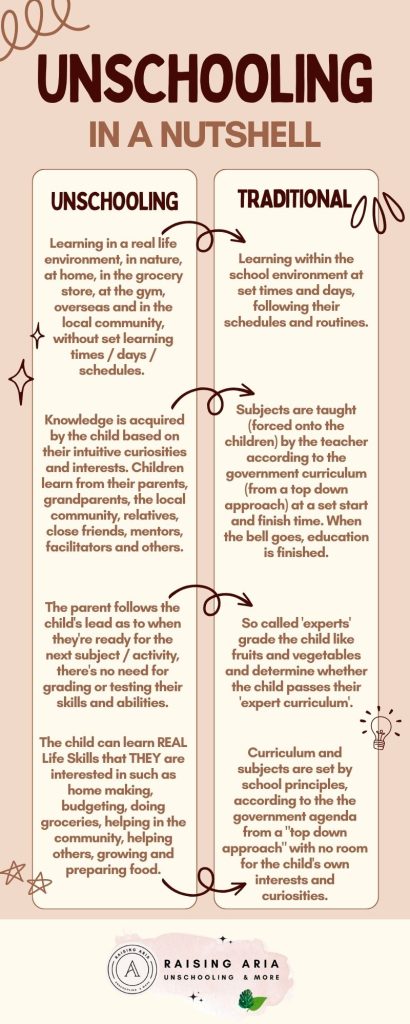
- In unschooling, learning occurs throughout the day, in a real life environment, in nature, at home, in the grocery store, at the gym, overseas and in the local community.
- In unschooling, knowledge is acquired by the child based on their intuitive curiosities and interests. They learn from their parents, grandparents, the local community, relatives and close friends.
- In unschooling (and part of the Montessori method which I’m a big fan on), the parent follows the child’s lead as to when they’re ready for the next subject / activity, there’s no need for grading or approving of a certain skill. This will naturally occur throughout the learning process.
- In unschooling, the child learns REAL Life Skills such as home making, cooking, budgeting, doing groceries, helping community, helping others, growing and preparing food.
Starting Our Unschooling Journey
Having attended a Montessori school myself, I have a never ending curiosity and will to learn, discover and question the status quo. This led me to find out about “unschooling” and as we’re on this journey, you can follow what we do on this blog.
Here’s how our unschooling journey started:
- FIRST: During the newborn months of our daughter, I listened to “The Montessori Baby” by Simone Davies. I loved this approach SO much, that we adopted this at our home and setup our Montessori Inspired Playroom/Movement Area, and Montessori Inspired Floorbed.
- SECOND: Then I came across a podcast episode with Ben Greenfield and the Fat Fueled Family who talked about “unschooling”. I already was considering homeschooling.
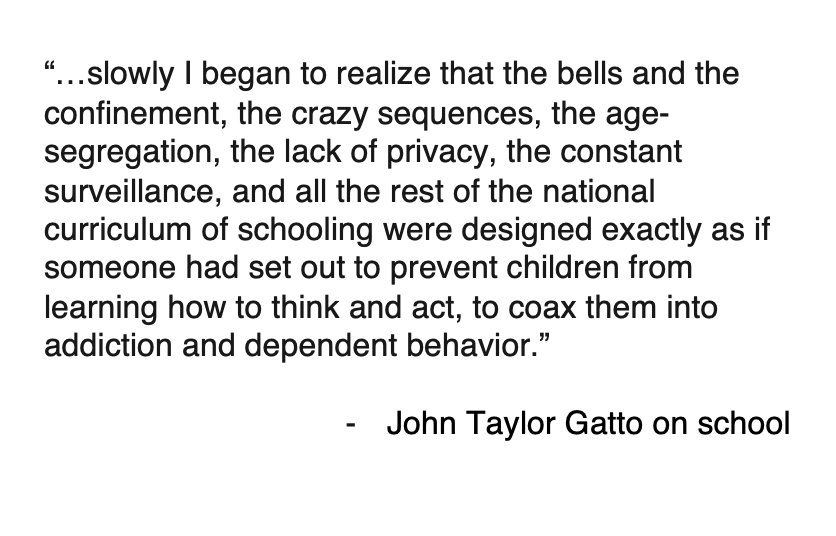
- THIRD: Then I read “John Taylor Gatto dumbing us down”. After reading this I was sure to never send my child to ordinary school and decided to Unschool. Then I picked up the next read.
- FOURTH: Then I read “Unschooled” by Kerry McDonald which is a great summary and helpful book about unschooling, what it is, how to get started and has some deep research studies backing it up.
- Next on my reading list are How Children Learn by Jason Holt (pioneer in unschooling) and Free to Learn.
Helpful Resources & Articles On Unschooling


One of my favourite books that led me to start our own unschooling journey, is Dumbing us Down: The Hidden Curriculum of Compulsory Schooling by John Taylor Gatto who is was a teacher for 30 years and wrote some wonderful books about the government institutionalised programs called schools. Here’s a wonderful quote from the book:
Here are some helpful links you may want to explore to learn more about unschooling and how it works in Australia.



Comments are closed.