

Do you wonder how to keep your 11 month old occupied? Or are you interested in starting Montessori with your 11 month old? Keep on reading as below are some activities you may want to try with your little one.
At this stage of their development, babies are eager to explore, engage, and learn about the world around them. Incorporating Montessori principles into their playtime can provide them with valuable opportunities for growth and development.
From sensory play to fine motor skill practice and interactive games, Montessori activities aim to foster independence, stimulate cognitive development, and encourage sensory exploration.
Note: As with any activity, please ensure a safe environment, provide close supervision, and adapt the activities to suit your baby’s unique abilities and interests.
Here are some Montessori inspired activities for an 11 month old baby. Remember to always supervise the baby during these activities and ensure that all materials are safe and age-appropriate. Observe their interests and adapt the activities to suit their developmental stage and abilities.
Discovery Basket
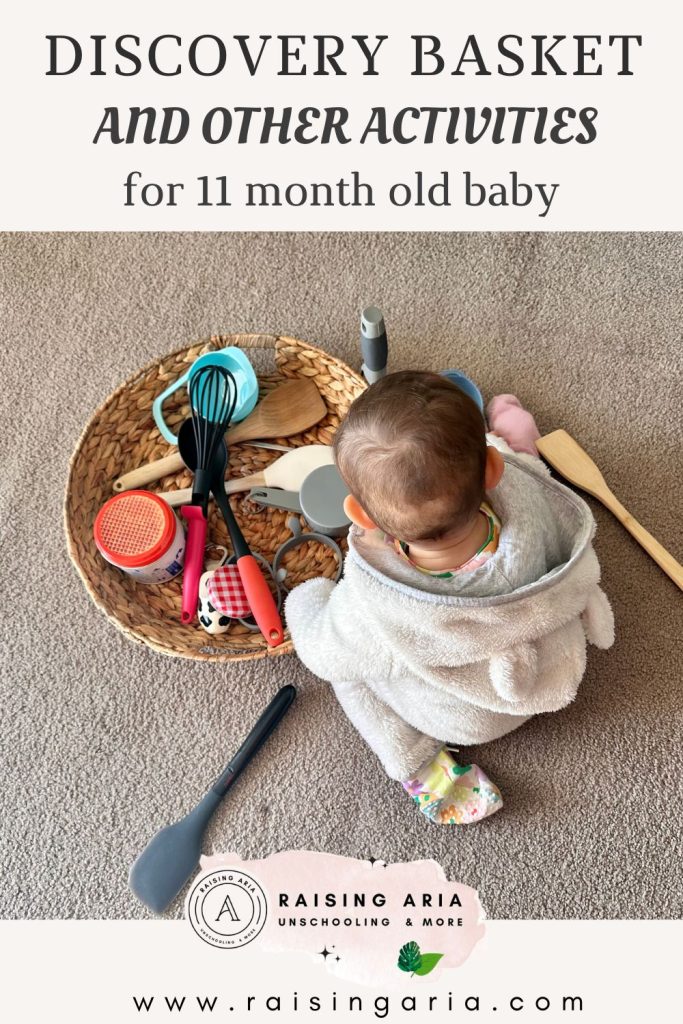
Listed first on the list of my fave Montessori Inspired activities for 11 month old is the discovery basket. This is one of my favourite activities for my little one as it means I have to get create as a parent (which is something I enjoy a lot)!
How To: Create a discovery basket (also known as treasure basket) filled with safe and interesting objects of different textures, shapes, and sizes. You can also for example make a “themed kitchen / bathroom / fitness basket”. Offer your little one items like soft fabric squares, wooden blocks, rattles, balls, or natural objects such as pinecones or seashells.
Let your little one explore and discover the items independently.
Benefit: Discovery baskets provide opportunities for sensory exploration, helping babies develop their tactile senses and fine motor skills.
They also encourage independent exploration and stimulate curiosity and discovery.
See some great examples at The Imagination Tree blog and 16 Benefits Of Using Treasure Baskets With Babies and Montessori-Inspired Activities at 11 Months.
Posting Activities
How To: Provide a container with a wide opening and a set of large, easy-to-grasp objects such as fabric or wooden balls. Encourage the baby to practice posting the objects into the container, developing hand-eye coordination and fine motor skills.
Benefit: Posting activities enhance hand-eye coordination, fine motor skills, and spatial awareness. Babies practice gripping and releasing objects, improving their dexterity and finger control.
Sensory play with textures
How to: Set up a sensory exploration area with various textured materials such as a soft blanket, a fuzzy rug, a smooth mirror, or a bumpy sensory ball. Allow your little one to touch and explore different textures, stimulating their sensory development.
Benefit: Sensory play with different textures stimulates the baby’s senses and promotes sensory integration. It encourages sensory exploration, helps develop tactile discrimination, and expands their sensory vocabulary.
Mirror Play
How to: Place a child-safe mirror at the baby’s level and encourage them to interact with their reflection. This activity promotes self-awareness, visual tracking, and social interaction.
Benefit: Mirror play supports the baby’s self-awareness and identity development. Interacting with their reflection helps them recognise themselves, develop body awareness, and engage in social interaction as they respond to their own movements and expressions.
Gross motor activities
How to: Provide opportunities for the baby to practice crawling, rolling, or pulling up to stand. You can set up soft cushions or mats for them to climb over or crawl through, supporting their gross motor development.
Benefit: Engaging in gross motor activities like crawling, rolling, and pulling up to stand promotes physical strength, coordination, and balance. It helps babies develop their large muscle groups, prepares them for walking, and builds confidence in their movement abilities.
Water play
How to: Fill a basin or shallow container with a small amount of water and provide baby-safe cups, spoons, or scoops. Let the baby explore pouring and transferring water between the containers, developing hand-eye coordination and sensory exploration.
Benefit: Water play provides a stimulating sensory experience while promoting hand-eye coordination and fine motor skills. It encourages exploration, develops an understanding of volume and pouring, and can help with early concepts of cause and effect.
Reading and picture books
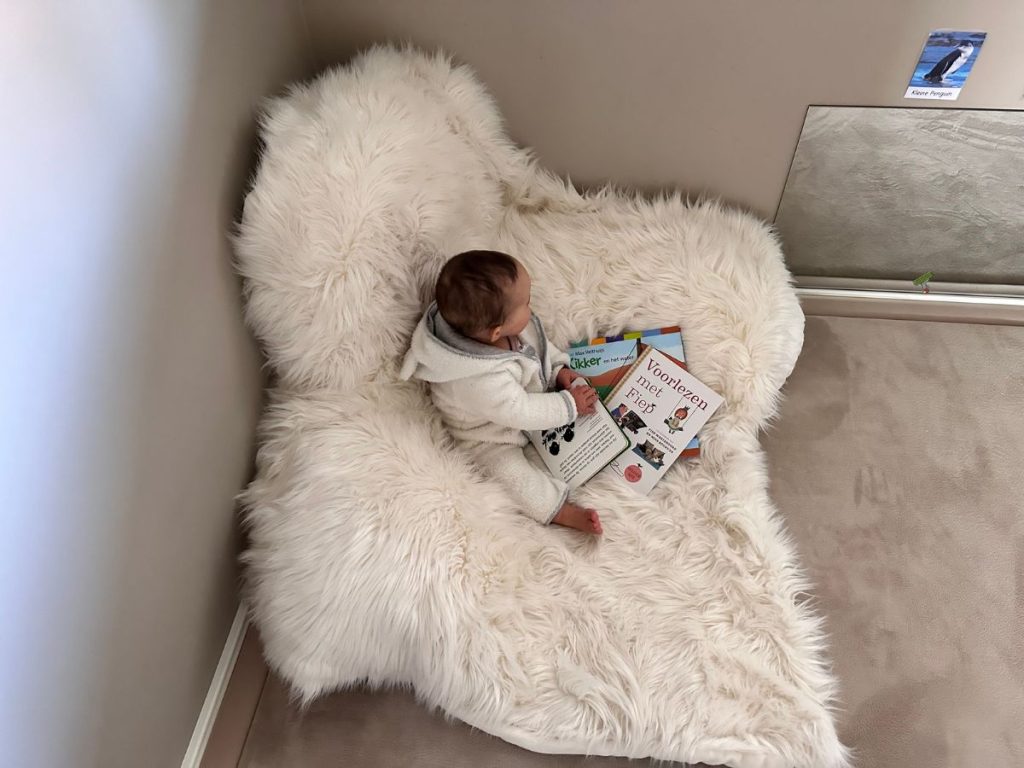
How to: Read simple, colourful books with large pictures and textures. Engage the baby by pointing to the images, making sound effects, and encouraging them to touch and explore the book.
Benefit: Reading and engaging with picture books support language development, early literacy skills, and cognitive growth. Babies are exposed to new vocabulary, practice visual tracking, and develop an appreciation for books and storytelling.
Toy Prison Game
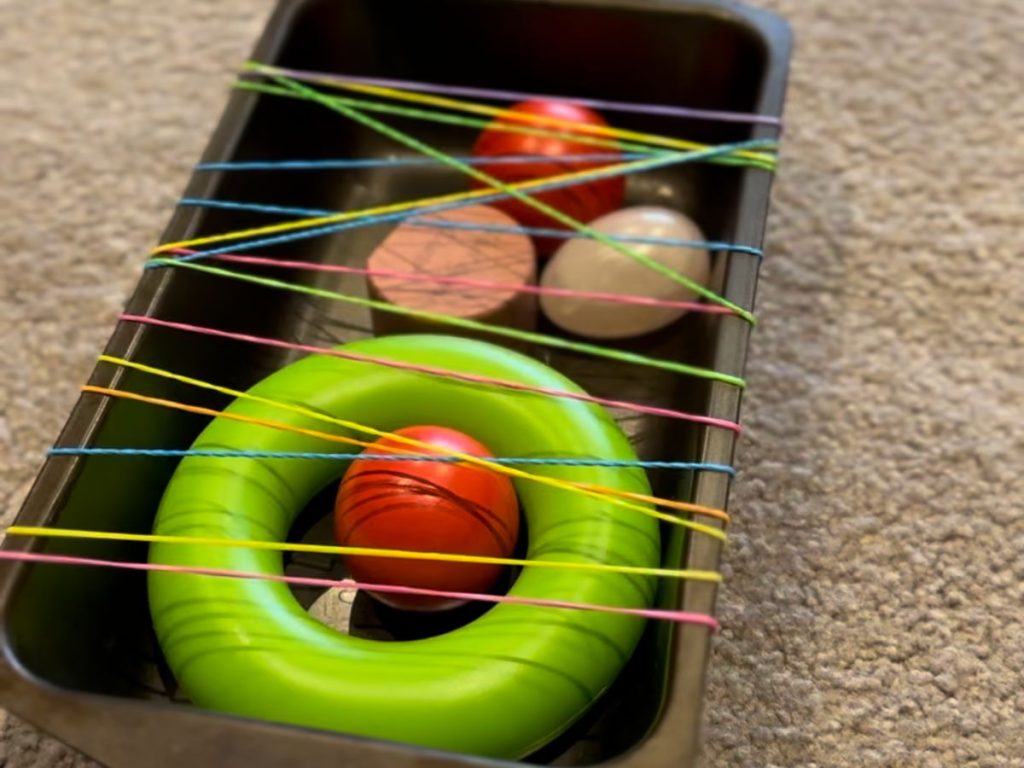
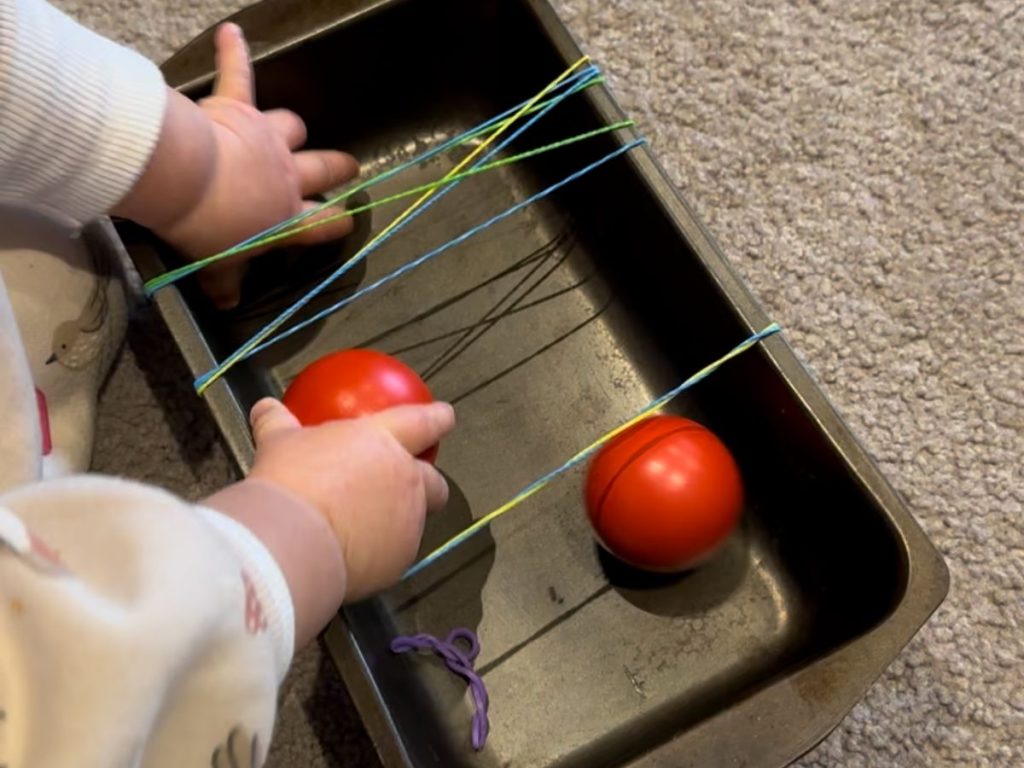
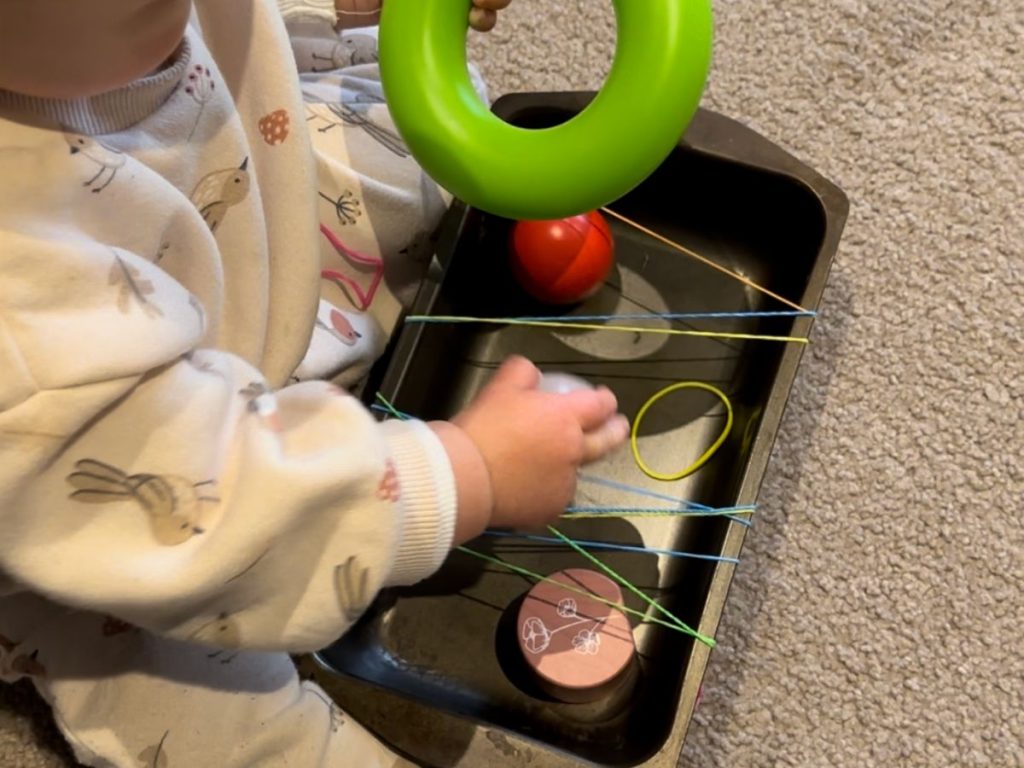
How to:
- Choose a few soft toys or stuffed animals that the baby enjoys playing with.
- Create a small “prison” area using a low-sided basket or container with an open top. Make sure it’s a safe and sturdy container that the baby cannot easily topple over.
- Show the baby how to gently place one of the toys inside the “prison.”
- Encourage the baby to release the toy from the “prison” by lifting it out or reaching inside the container.
- Repeat the process with other toys, allowing the baby to explore and interact with the game.
Benefit: The toy prison game promotes fine motor skills, hand-eye coordination, and problem-solving abilities. Babies learn to manipulate objects and understand cause and effect as they figure out how to release the toys from the “prison.”
The Wrap Up
I hope you enjoyed some of these suggestions and that your little one enjoys it. By engaging in activities such as these, your little ones has the opportunity to explore their surroundings, develop their senses and motor skills, foster cognitive and language development, and strengthen their understanding of the world around them.
Remember to adapt the activities to suit each baby’s unique wants, needs and abilities while providing a safe and nurturing environment for exploration and learning.




Comments are closed.